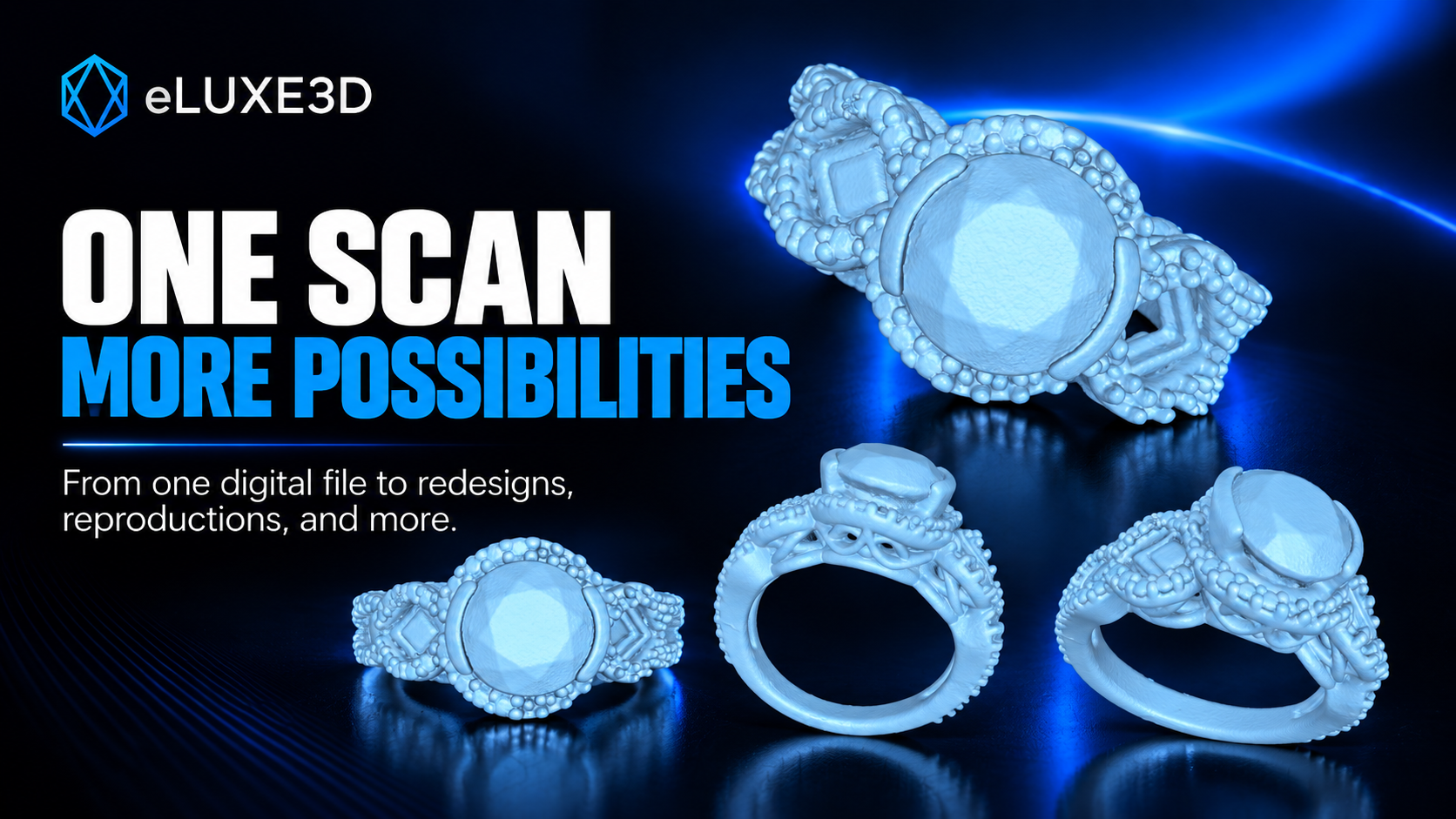
MORE POSSIBILITIES.
A digital jewelry file can become more than the output of one project. It can become a foundation that a jeweler returns to again and again.
Most people think about a 3D scan as the beginning of one job. Scan the piece, bring the geometry into CAD, complete the project, and move on. But the digital file created during that process can continue delivering value long after the original job leaves the bench.
Once a physical piece of jewelry has been captured digitally, the jeweler has something that did not exist before: a reusable geometric reference to the original object.
That reference can support today's design project, but it can also become the starting point for tomorrow's reproduction, restoration, matching piece, modification, documentation, or completely new design.
The important shift is simple: stop thinking about the scan as the end product. Think about it as a digital asset.
The Physical Piece Exists Once. The Digital Version Can Keep Working.
A physical ring, pendant, component, or heirloom has limitations. It has to be physically present to be measured. It can be worn, damaged, repaired, altered, sold, inherited, or lost. And every time another project begins, a jeweler may otherwise have to start the measuring and documentation process again.
A detailed digital model changes that relationship.
Instead of relying only on hand measurements, photographs, notes, or memory, the geometry itself can become part of the project's digital record. That file can then move into CAD software and remain available as a reference for future work.
A customer may walk out with the original piece. The jeweler can still retain the digital foundation needed to continue working.

What Can You Actually Do With the File?
The answer depends on the piece and the project, but the value of digital capture extends far beyond simply viewing a 3D model on a screen.
Reproduce a Piece
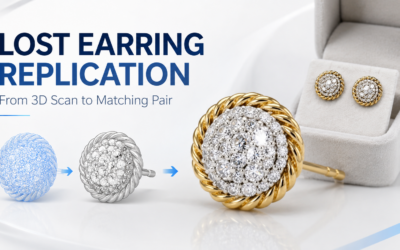
If an original needs to be recreated later, its digital geometry can provide a detailed starting point without requiring the jeweler to reconstruct the entire shape from memory or basic measurements.
Create a Matching Design
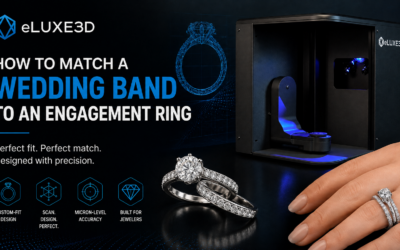
Existing geometry can be brought into CAD when designing around a physical piece, such as developing a matching band, coordinating component, or complementary design.
Redesign or Modernize
The original form can serve as the foundation for a new interpretation, allowing important proportions, shapes, or details to be referenced while the design itself evolves.
Document an Heirloom
A digital record can preserve the geometry of a meaningful piece before it undergoes repair, restoration, modification, or other physical changes.
Return to a Previous Project
When a customer comes back months or years later, an organized digital file can give the jeweler a far stronger starting point than beginning the intake process from zero.
Explore Something New
Once physical geometry becomes digital, designers can use it as reference material for future concepts, variations, production decisions, and entirely new creative directions.
One Customer Visit Can Create a Future Starting Point
Consider a customer who brings in a ring for a matching band.
The immediate job may be straightforward: capture the ring, use its true geometry as the foundation for CAD, design the matching piece, and complete the project.
But once the original ring has been digitized, that file does not have to lose its usefulness simply because the matching band is finished.
Today's Project
Use the scan as a precise digital reference for the work currently on the bench.
Tomorrow's Request
Return to the geometry when the customer wants a reproduction, alteration, or related piece.
Long-Term Record
Keep the digital model as part of an organized history of the piece and the work performed around it.
This is where digital capture begins to change the economics of the workflow.
Time spent capturing a piece does not necessarily benefit only one project. The resulting file can continue supporting future work, reducing how often the same physical object needs to be measured, documented, or recreated from scratch.
A Digital Archive Can Become Part of the Business
For a jewelry business handling custom work, repairs, heirlooms, reproductions, and repeat clients, individual scan files can eventually become something larger: a digital library of past work.
Instead of thinking only in terms of files stored somewhere on a computer, consider what those files represent. Each one can preserve a piece of geometry, a customer project, a design starting point, or a snapshot of an object at a specific moment in time.
Organized correctly, that information can make future projects easier to revisit and can reduce dependence on scattered photographs, handwritten measurements, and recollection.
The scanner captures the physical piece once. The business decides how much value to create from that digital information afterward.
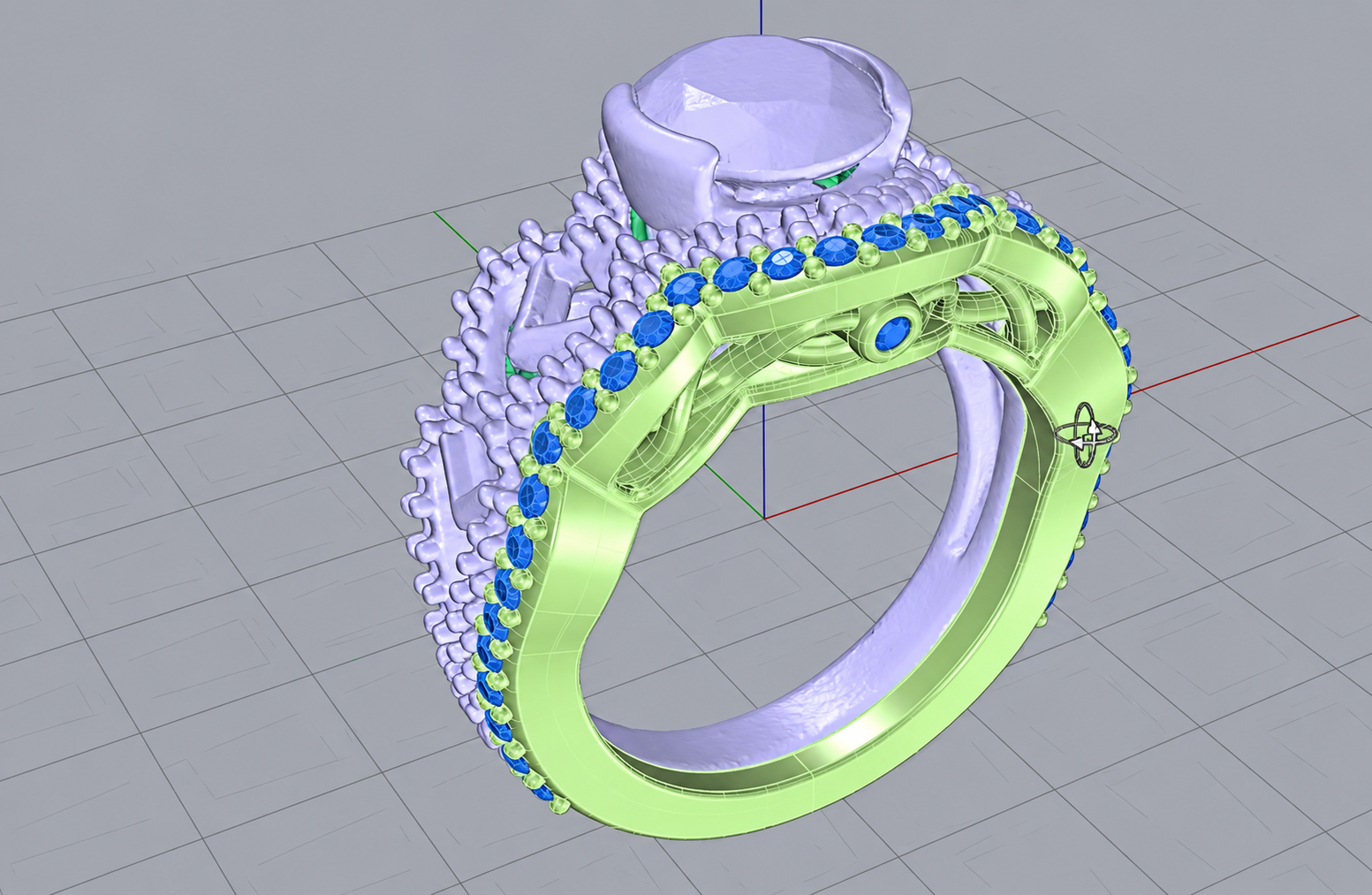
The Real Value Starts After the Scan
Accuracy and speed matter. But those specifications only explain part of the value of bringing physical jewelry into a digital workflow.
The bigger opportunity is what happens once accurate geometry becomes available to the jeweler.
A physical object that previously had to be present every time it was measured can now have a digital counterpart. A finished project can leave behind a usable starting point. An heirloom can be documented before it changes. A customer's previous piece can inform what they ask for next.
And a tool initially purchased to solve one problem can begin supporting many different parts of the business.
That is the long-term value of digital jewelry files: one scan can contribute to far more than one job.
Turn Physical Jewelry Into a Digital Starting Point.
From reproduction and custom-fit design to archiving and future redesigns, eLUXE3D helps jewelers bring physical pieces into a workflow that can keep working long after the initial scan is complete.
Explore eLUXE3D