
Print-Ready Meshes in Minutes for Faster Jewelry 3D Printing Workflows
Create clean STL, OBJ, or PLY files from detailed scans so you can move from concept, reference piece, or existing jewelry geometry to castable, 3D-printed parts faster and with a stronger digital starting point.

Better scan data can shorten the path to a printable part
eLUXE3D supports 3D printing workflows by generating STL, OBJ, and PLY files from detailed scans. When the next step is fabrication, a usable mesh can reduce the need to rebuild every surface manually before production begins.
In jewelry workflows, that can support faster prototype iteration, cleaner handoff to print preparation, and a more practical route from existing geometry to castable parts.
Mesh formats that matter
STL is widely used in 3D printing pipelines, while OBJ is a broadly recognized 3D surface-geometry format. Having both available helps move scan data through real-world design and fabrication software more easily.
Useful for complex forms
Additive manufacturing is especially valuable for complex geometry and customized parts, which makes accurate scan-derived mesh data highly relevant in jewelry production.
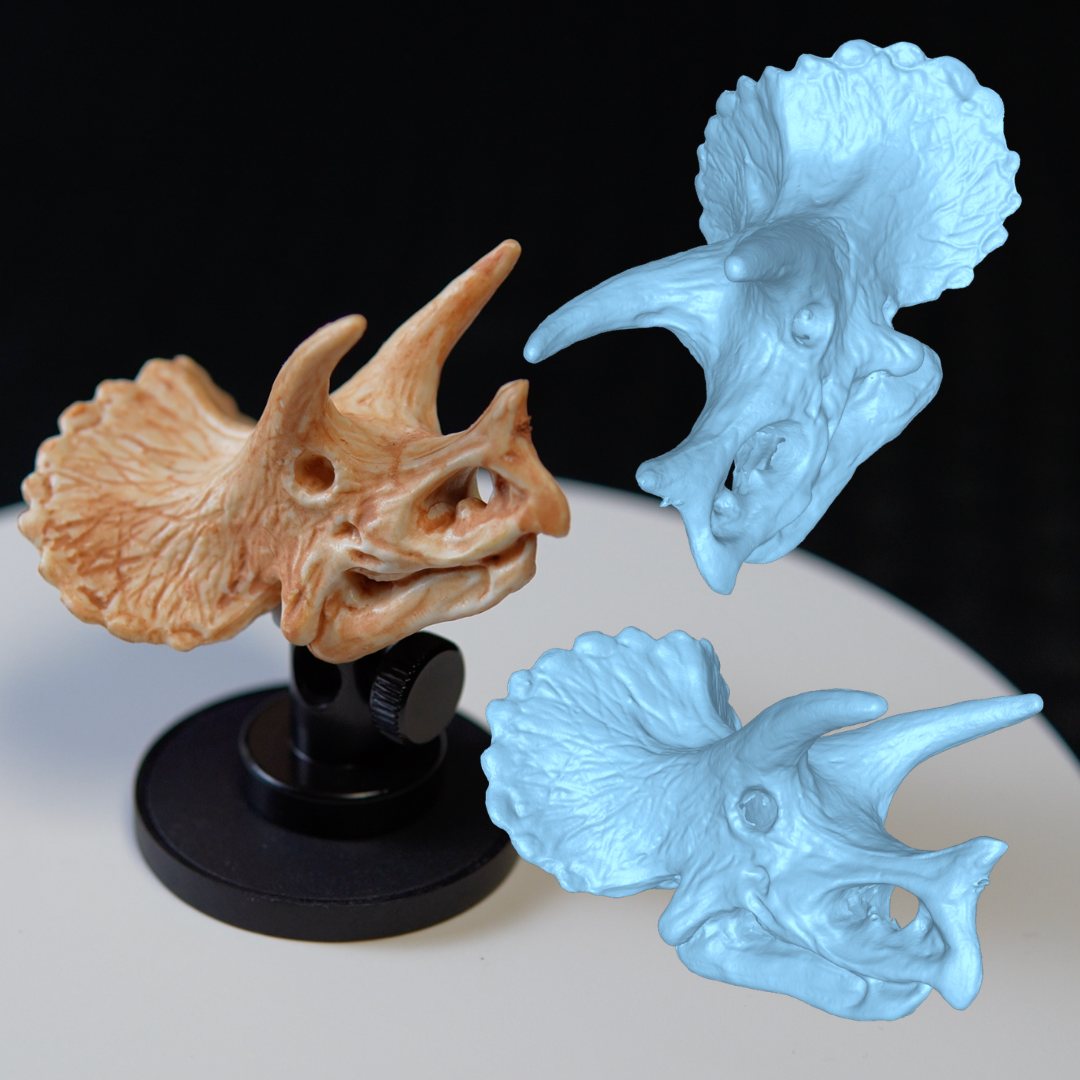
A stronger scan-to-print starting point for jewelry production
The goal is not just to create a scan. It is to create a mesh that can actually move forward into production.
From scanned geometry to castable, 3D-printed parts
eLUXE3D fits best when the next step is actual fabrication. This production flow is where clean mesh output creates real value.
Scan the piece
Capture the jewelry form, reference object, or existing part in detailed digital mesh form.
Export the file
Generate STL, OBJ, or PLY output that can move naturally into fabrication-related software.
Refine if needed
Adjust the mesh or build from it as needed for print preparation, fit, or production goals.
Move toward casting
Use the resulting data to support prototypes, printed patterns, and castable part development.
Where 3D printing from scan data adds the most value
Best for projects where existing geometry needs to become a usable production asset quickly.
Castable part preparation
Useful when scan data needs to become a fabrication-ready starting point for printed patterns, design refinement, or casting development.
Prototype iteration
Support faster concept testing and form review by moving from real geometry into a printable digital part without rebuilding everything from scratch.
Existing piece adaptation
Helpful when an existing jewelry form needs to be scanned, modified, and brought into a print-based workflow for an updated or related design.
Questions about 3D printing from jewelry scan data
See how scan-generated mesh files can support faster fabrication, cleaner production handoff, and a more practical path from existing geometry to printable jewelry parts.
Can scanned jewelry be turned into 3D-printable files?
Yes. When a scanner outputs mesh formats such as STL, OBJ, or PLY, the captured geometry can move into print and production workflows much more naturally than if the piece had to be rebuilt entirely by hand first.
Why are STL and OBJ important for 3D printing workflows?
STL is a common triangular mesh format used in many 3D-printing pipelines, and OBJ is a widely recognized 3D surface-geometry format. Their broad familiarity makes them useful for moving parts between scan, design, and fabrication stages.
Does scan-to-print help with jewelry customization?
It can. Additive manufacturing is especially strong for complex geometry and customization, so having detailed scan-based mesh data can support faster work on custom modifications, related parts, and fabrication-driven design changes.
Is scan data always ready to print immediately?
Not always. Depending on the project, teams may still refine or adapt the mesh before printing, but starting from accurate scan-based geometry can reduce manual rebuilding and shorten the path toward a castable or printable result.
See how eLUXE3D supports faster scan-to-print jewelry workflows
Generate detailed mesh files for 3D printing, castable part development, and fabrication-ready workflows without adding unnecessary rebuild time.